Home | About PhotoAtelier | Archives
26 de March de 2025 5:55 pm
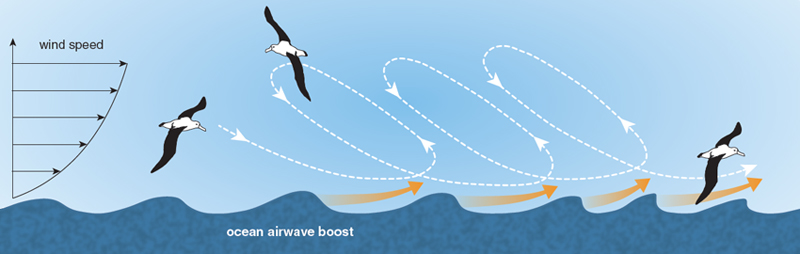
Dynamic soaring involves extracting energy from differences in wind speed, but the process is more nuanced than simply moving between “lower” and “higher” wind speed zones. Instead, it relies on the wind shear—the change in wind speed and direction with altitude—and the bird’s ability to maneuver through these variations to gain energy.
Seabirds use a cyclical flight pattern to exploit wind shear. They begin by flying into the wind at a lower altitude, where the wind speed is relatively slower due to friction with the ocean surface. As they climb, they gain altitude and enter a region where the wind speed is faster. At this point, they turn downwind, using the increased wind speed at higher altitudes to accelerate. They then descend back into the slower wind zone near the surface, completing the cycle. By repeating this pattern, they continuously gain energy from the wind shear, allowing them to sustain flight without frequent flapping.
This process is not just about moving between two fixed zones of wind speed but rather about exchanging momentum between the air masses at different altitudes. The bird’s ability to skillfully navigate these transitions is key to dynamic soaring. This technique is particularly advantageous for seabirds in the Southern Ocean, where strong and consistent winds create ideal conditions for this energy-efficient flight strategy while foraging for food.
Wandering Albatross (Diomedea exulans), the iconic Antarctic seabird, is the most well-known dynamic soarer, these birds travel thousands of miles across the ocean with minimal flapping of their wings.
Posted by PhotoAtelier
Categories: Mind
Tags:
Mobile Site | Full Site
Get a free blog at WordPress.com Theme: WordPress Mobile Edition by Alex King.