-
Archives
- February 2026
- January 2026
- November 2025
- September 2025
- August 2025
- July 2025
- June 2025
- May 2025
- April 2025
- March 2025
- January 2025
- December 2024
- November 2024
- October 2024
- September 2024
- August 2024
- July 2024
- June 2024
- May 2024
- April 2024
- March 2024
- February 2024
- January 2024
- December 2023
- November 2023
- October 2023
- September 2023
- August 2023
- July 2023
- June 2023
- May 2023
- April 2023
- March 2023
- February 2023
- January 2023
- December 2022
- November 2022
- October 2022
- September 2022
- August 2022
- July 2022
- June 2022
- May 2022
- April 2022
- March 2022
- February 2022
- January 2022
- December 2021
- November 2021
- October 2021
- September 2021
- August 2021
- July 2021
- June 2021
- May 2021
- April 2021
- March 2021
- February 2021
- January 2021
- December 2020
- October 2020
- September 2020
- August 2020
- July 2020
- June 2020
- May 2020
- April 2020
- March 2020
- February 2020
- January 2020
- November 2019
- October 2019
- September 2019
- August 2019
- July 2019
- June 2019
- May 2019
- April 2019
- March 2019
- February 2019
- January 2019
- December 2018
- November 2018
- October 2018
- September 2018
- August 2018
- July 2018
- June 2018
- May 2018
- April 2018
- March 2018
- February 2018
- January 2018
- December 2017
- November 2017
- October 2017
- September 2017
- August 2017
- July 2017
- June 2017
- May 2017
- April 2017
- March 2017
- February 2017
- January 2017
- December 2016
- November 2016
- October 2016
- September 2016
- August 2016
- July 2016
- June 2016
- May 2016
- April 2016
- March 2016
- February 2016
- January 2016
- December 2015
- November 2015
- October 2015
- September 2015
- August 2015
- July 2015
- June 2015
- May 2015
- April 2015
- March 2015
- February 2015
- January 2015
- December 2014
- November 2014
- October 2014
- September 2014
- August 2014
- July 2014
- June 2014
- May 2014
- April 2014
- March 2014
- February 2014
- January 2014
- December 2013
- November 2013
- October 2013
- September 2013
- August 2013
- July 2013
- June 2013
- May 2013
- April 2013
- March 2013
- February 2013
- January 2013
- December 2012
- November 2012
- October 2012
- September 2012
- August 2012
- July 2012
- June 2012
- May 2012
- April 2012
- March 2012
- February 2012
- January 2012
- December 2011
- November 2011
- October 2011
- September 2011
- August 2011
- July 2011
- June 2011
- May 2011
- April 2011
- March 2011
- February 2011
- January 2011
- December 2010
- November 2010
- October 2010
- September 2010
- August 2010
- December 2009
- November 2009
- August 2009
- July 2009
Polimatia
Posted in Body
Leave a comment
A Theory of Play and Fantasy – Bateson
Formulated as a series of hypotheses/ideas:
- Verbal communication types (177-178)
- Denotative
- Metalinguistic – subject of discourse is language itself
- Metacommunicative – subject of discourse is relation b/t speakers
- Implicit information on how to interpret metacomm messages

- Evolution: key stage is recognition of sign as signal
- -> representation can now be evaluated
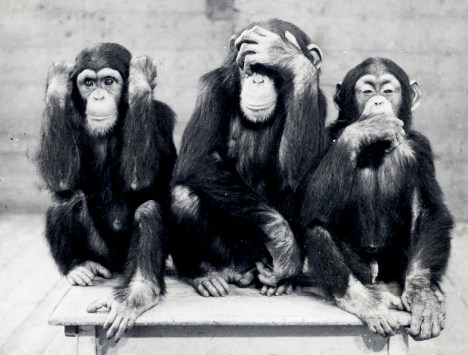
- -> representation can now be evaluated
- Observed monkeys play: resembles combat, but human observers can tell it isn’t, and monkeys themselves are also aware it isn’t (179)
- Requires metacomm

- Requires metacomm
- 4. Message of “this is play” (180)
- = what we are doing does not mean what it does normally
- Playful action denotes that action, but not what the action itself denotes
- E.g. a nip denotes a bite, but not aggression
- 2 degrees of abstraction used
- 5. Map-territory relation: message does not consist of what it denotes (180-181)
- 6. Threat is like play metacomm (181)

- 7. Histrionic behavior, deceit, dramatization as well
- 8. Play, threat, etc. are all part of a complex of phenomena

- 9. Ritual: distinguish denotation from denoted (182)

10. More complex play: actions built around the question “is this play?”
11. Second paradox of play: actions performed are themselves fictional
12. Non-denoted thing can be taken as real (183)
13. Frames and contexts: the paradoxical frame (184)
14. If first statement is false -> rest are true
- Primary reaction
- Higher level thought recognizes this is not necessary (independent truth values)

15. When playing, the frame can go unrecognized (185)
16. Premises are intransitive
17. Definition of a psychological frame (186)
- 1) delimits a set/class of action
i. Distinguishes play from nonplay
18. Function and use of psychological frame (187)
- Exclusive – excluding some things includes others
- Inclusive – including some things excludes others
- Related to premises – must interpret things w/in the frame different from those outside
i. All included share premises
- Metacomm – message that defines the frame -> instructions on interpretation (188)
- Metacomm + metalinguistic messages define set of messages frame is about
i. All are about or define a frame
- Frame vs perceptual gestalt
i. Frames need an outer frame to define the ground for figures
ii. Background set must all be same degree of abstraction as the foreground set (189)
iii. Serves to delimit a logical type
iv. Thus paradoxical (dividing 2 logical types)
19. 3 types of message seen in animal behavior
- Mood-signs
- Simulations of mood-signs
- Messages to enable the receiver to distinguish (a) and (b)
i. E.g. “this is play”
20. This triadic constellation is seen elsewhere (190)

21. Frames for psychotherapy
- Is psychopathology due to frame/paradox handling?
- Does psychotherapy use frames/paradoxes?
- Can we explain this process of manipulation in terms of frames/paradoxes?
![daniel arsham 3[10]](https://photoatelier.org/wp-content/uploads/2013/03/daniel-arsham-310.jpg?w=520&h=782)
22. Schizophrenic = lack metacomm
23. Therapy = change patients metacomm habits (191)
- Must communicate at a meta-level about changes in metacomm rules
- Frame = spatial + temporal boundary on a set of interactive messages***
- (magic circle!)
- Therapy = recognize, discuss, and change metacomm rules (192)
i. Then resume play/game
ii. Issue is we can’t really separate the 2 processes
- Must discuss changes w/in the game
- Rules remain implicit, but are changeable
- Must propose experimental actions as part of the game
24. Not clear on explaining front
25. Paradoxes of abstraction are necessary
Summary notes:
-need to implicitly suggest new actions/rules/modifications
-improv and shared mental models
-cannot step outside normal bounds
-everything must remain w/in the regular course of interaction
-e.g. Super Mario Bros. where blocks suggest an action w/o explicitly telling you
-cannot / should not break 4th wall
-meanings of actions do not extend universally, but are local to a frame/situation or a smaller portion of one
-key idea is metacommunication – ability to recognize + send messages regarding the relation b/t interactors
-multiple levels of interpretation of messages
via:
http://alexzook.wordpress.com/2011/03/05/a-theory-of-play-and-fantasy/
Posted in Mind
Leave a comment
Diegesis
an interior view of a world
extradiegetic level
narrator’s level, the level at which exists a narrator who is not part of the story he tells.
diegetic level
level of the characters, their thoughts and actions.
metadiegetic level or hypodiegetic level
part of a diegesis that is embedded in another one and is often understood as a story within a story, as when a diegetic narrator himself/herself tells a story.

Vanessa’s solo in Irruptions: Ankoku Butoh Ritual & Sound at The Chapel
“Ankoku butoh,” the dance of darkness.
Beyond that, Butoh is easy to talk about and almost impossible to define.
Butoh dance emerged from post war Japan in 1959, and because of being born from devastation, Butoh is at its root a dance that grows like a flower from rubble, malformed but hungry, alive, seeking light.
The essence of Butoh dance is crisis and growth.
But what is Butoh?
I can say this: I have not experienced a more relevant and immediate form of social expression than Butoh dance. To me butoh is the same as Jean Genet — an all seeing eye inside a gutter it refuses to leave. Butoh is always relevant because it is a dance that springs from its environment … it is the dance of the morning after, of existing with the consequences of others’ actions. Accept that you were born with radiation poisoning from the atomic bomb, or with fetal alcohol syndrome or with flippers for hands. You didn’t have any choice about that. That you were born and the conditions you were born in were the dances of others. But what will you do now? How will you choose to live your life? In a sense, that is your ankoku butoh dance. You look inside to find the reason to move.
Butoh dance embraces paradox, nuance and moral complexity and eschews rigid definitions. It insists on rawness inside fragility, on primitivism inside complexity, on emotion and instinct as fine art.
Butoh, by its nature, has always been challenging to present to larger audiences. It is rarified and subtle, acutely intimate, and often considered grotesque. Further, Butoh can be trying for Western audiences as it seems to slow down time, even as everything else in our lives is accelerating. This is by design. Butoh stops and breathes. Butoh asks for a greater level of concentration from its audience. This bond of concentration creates a performance environment of uncommon emotional depth, a shared passage, and hopefully, a small, lasting transformation.
Fundamental concerns of the butoh dancer:
Finding new ways to live and new bodies to live in
.
.
.
.
.
.
Learning to understand the value of each life and each death
.
The interconnection of all things
.
.
.
.
.
.
.
.
.
.
.
.
.
.
.
The manifestation of all things through the dancer’s body
Butoh is a performance, but its preoccupation is with adaptation; each dance grows up out of the fault lines in human cultures that bring our societies again and again into conflict, devastation, and alienation from the natural world. Butoh challenges and attempts to transform preconceptions of the mind, of the body, of movement; to bring greater attention and sensitivity to how we perceive and interact with the world. How do we behave once we know we are connected to everything?
And what is Butoh dance?
Billions and billions of lives and deaths happened for you to be here right now … the history of these lives and deaths is written inside you, in your DNA. Butoh dance is the story of all those lives and deaths emanating from the temporary body of the dancer. And soon, that dancer’s life and death will dance through someone else. Butoh dance is not a memorial, it is an eternal recognition, stepping forward.

via:
Posted in Body
Leave a comment