Pog mo Thoin
“A forest is much more than what you see,” says ecologist Suzanne Simard. Her 30 years of research in Canadian forests have led to an astounding discovery — trees talk, often and over vast distances. Learn more about the harmonious yet complicated social lives of trees and prepare to see the natural world with new eyes.
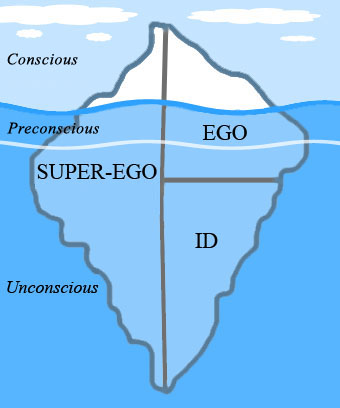
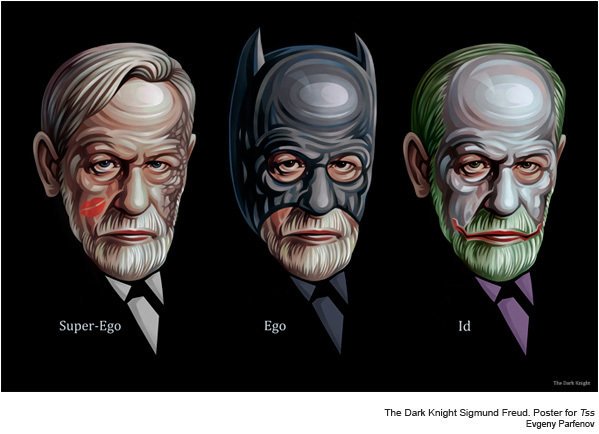
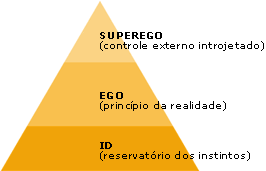
Superego, Supereu (Überich) designa na teoria psicanalítica uma das três instâncias dinâmicas do aparelho psíquico.
É a parte moral psique e representa os valores da sociedade.
O superego divide-se em dois subsistemas: o Ideal do ego, que dita o bem a ser procurado; e a consciência moral (al. Gewissen), que determina o mal a ser evitado[1][2].
O superego tem três objetivos:
O superego forma-se após o ego, durante o esforço da criança de introjetar os valores recebidos dos pais e da sociedade a fim de receber amor e afeição. Ele pode funcionar de uma maneira bastante primitiva, punindo o indivíduo não apenas por ações praticadas, mas também por pensamentos; outra característica sua é o pensamento dualista (tudo ou nada, certo ou errado, sem meio-termo)[1][2].
Os psicopatas têm um id dominante e um superego muito reduzido, o que lhes tolhe o remorso, sobressaindo a falta de consciência moral[4].
O superego nem sempre é consciente, muitos valores e ideais podem ser despercebidos pelo eu consciente.
Referências
via
A palavra que designa a Divindade principia, em todas as línguas latinas, por um D, e em grego por um “delta”, ou triângulo, cujos lados representam a natureza divina. No centro do triângulo está a letra Yod , inicial de Jehovah – o Criador, expresso nos idiomas teuto-saxônicos pela letra G, inicial de God, Got ou Gottam, cujo significado filosófico é geração. [https://www.maconaria.net/pitagoras-e-a-sua-filosofia/]
A Tetraktys, pela qual os Pitagóricos passaram a jurar, era uma figura do tipo abaixo:
.
. .
. . .
. . . .
representando o número triangular 10 e com sua composição sendo 1 + 2 + 3 + 4 = 10.
O YOD representa o Principio das coisas (todas as formas têm seu princípio no ponto).
Considerando o valor numérico do YOD = 10.
O algarismo 1 representa o Principio Único, o Ser;
O zero nada vale por si mesmo, é o Nada relativo (pois o Nada absoluto não existe), o Não-ser, o qual, antepondo-se à unidade (01), não tem valor;
colocado porém, na ordem inferior, contribui para a elevação do todo (de 1 forma-se 10).
Assim, Deus, que é o Principio Único das coisas (1), produz o Universo (10) do reativo nada (0).
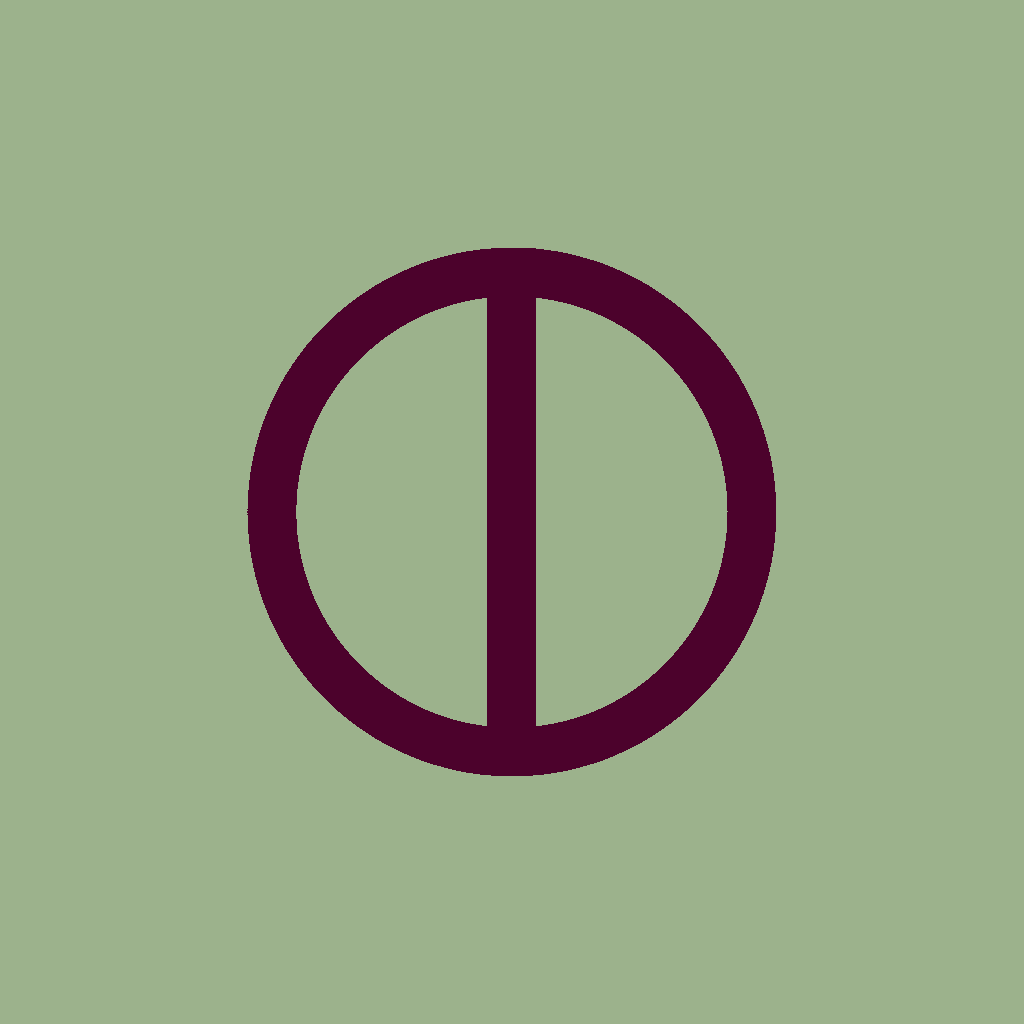
Geometricamente, representa-se 1 por um ponto, e o zero por uma circunferência ou pela coluna e o círculo:


O ponto central simboliza Deus, a Unidade Eterna, o principio de que todas as coisas emanam. A circunferência designa o Universo, a realidade sensível, que emana do centro. O símbolo inteiro é, pois, o símbolo de Deus e sua Criação.
“A coluna e o círculo “IO”, que era para Pitágoras o número perfeito contido no Tetratkys, converteu-se mais tarde em um número fálico por excelência, principalmente entre os Judeus, representando para estes o Jehovah macho e fêmea” (H.P. Blavatsky, A Doutrina Secreta, vol. IV, p.30)
via:
https://ponteoculta.blogspot.com.br/2010/04/iod-e-os-tres-pontos.html
Arthur Franco – A Idade das Luzes

Tom said to himself that it was not such a hollow world, after all. He had discovered a great law of human action, without knowing it — namely, that in order to make a man or a boy covet a thing, it is only necessary to make the thing difficult to attain.”
“There are two great tragedies in life. One is not getting what you want… the other is getting it.”
“The honey doesn’t taste so good once it has been eaten; the goal doesn’t mean so much once it has been reached; the reward is not so rewarding once it has been given. If we add up all the rewards in our lives, we won’t have very much. But if we add up all the spaces between the rewards, we’ll come up with quite a bit. [ . . . ] Each time a goal is reached, it becomes Not So Much Fun, and we’re off to reach the next one, then the next one, then the next. That doesn’t mean the goal doesn’t count. They do, mostly because they cause us to go through the process, and it’s the process that makes us wise, happy, whatever. [ . . .] What could we call the moment before we eat the honey? Some call it anticipation, but we think it’s more than that. We could call it awareness. It is when we become happy and realize it, if only for an instant. By Enjoying the Process, we can stretch that awareness out so it’s no longer only a moment, but covers the whole thing. Then we can have a lot of fun.”
After a time, you may find that having is not so pleasing a thing after all as wanting. It is not logical… but it is often true.”
So when the race is won
And there’s nothing left to do
Alone again,
But where are you?
After you get what you want, you don’t want it
If I gave you the moon,
You’d grow tired of it soon.
You’re like a baby
You want what you want when you want it
But after you are presented
With what you want, you’re discontented.
You’re always wishing and wanting for something
When you get what you want
You don’t want what you get
And tho’ I sit upon your knee
You’ll grow tired of me
‘Cause after you get what you want
You don’t want what you wanted at all.